James Robb: Establishing the Foundations (1837–1861)
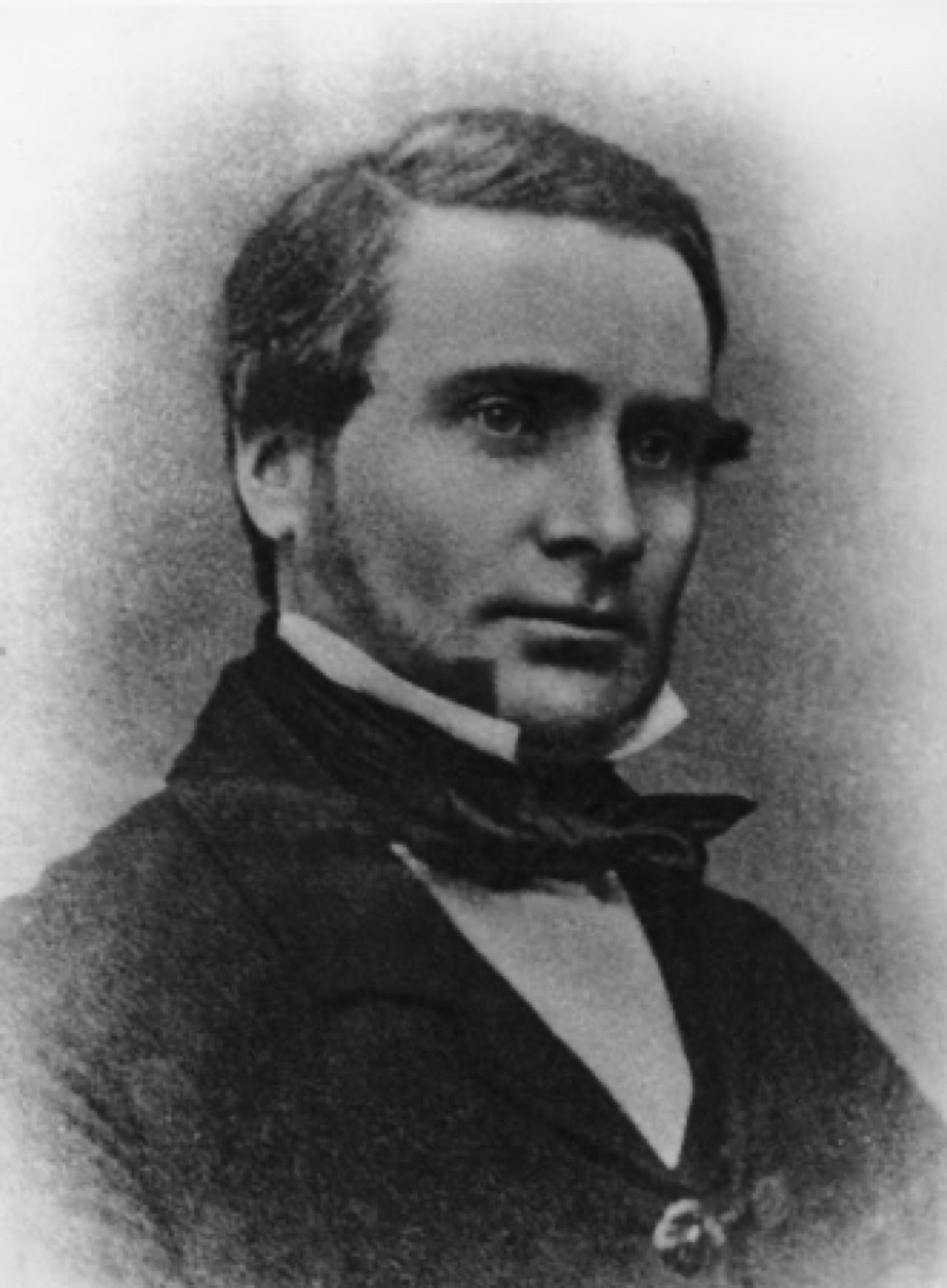
Professor of Chemistry & Natural Sciences (1837–1861)
The story begins in 1837, when Dr. James Robb arrived from Scotland to teach chemistry and natural science at King’s College, the predecessor of UNB.

Robb was a passionate advocate for scientific education and believed that students should learn by examining the natural world directly. He conducted geological expeditions throughout New Brunswick and produced a geological map of the province in 1849, contributing to the growing understanding of its natural resources.
In 1847, Robb and his colleague William Brydone-Jack appealed to the college administration for scientific equipment and the establishment of a museum. They argued that understanding Earth's history required students to examine the rocks, minerals, and fossils that preserved evidence of its past.
Despite limited funding, Robb began assembling the university's natural history collections through his own fieldwork and exchanges with other collectors. By the 1850s, the foundations of a geological museum had been established.
His dedication extended beyond the university. Through public lectures, scientific investigations, and work related to agriculture and natural resources, Robb helped demonstrate the practical value of science to New Brunswick society.
Robb established a tradition of learning through geological specimens and field observation that continues at UNB today.
Loring Woart Bailey: Expanding the Collections (1861–1907)

Professor of Chemistry & Natural Sciences (1861–1907)
After Robb’s death in 1861, Dr. Loring Woart Bailey joined UNB as Professor of Chemistry and Natural Science at only 21 years of age.
Educated at Harvard, Bailey brought new scientific connections and a strong commitment to field-based research. He explored the geology of New Brunswick and neighbouring regions, collaborated with prominent geologists, and contributed to the Geological Survey of Canada.
Bailey also continued Robb's efforts to build a university museum. Despite limited financial resources, he expanded the collections through fieldwork, donations, and specimen exchanges with leading scientific institutions, including Harvard, Yale, and the Smithsonian Institution.
By the 1870s, the museum contained extensive collections of minerals, fossils, plants, and animals. Its geological holdings were particularly important for documenting the natural history of New Brunswick and the broader Acadian region.
Bailey believed that a well-organized museum was essential for scientific education. He advocated for systematic classification and careful preservation, recognizing that collections should serve both current students and future generations. His vision extended beyond the classroom: the museum was intended to be a lasting repository of the province's natural heritage.
The specimens and historical records preserved today reflect Bailey’s vision: a collection that connects nineteenth-century exploration with future research, education, and stewardship.


From Natural History to Earth Sciences
As scientific understanding advanced, geology gradually emerged from natural history as a distinct academic discipline.
In the early twentieth century, geology became increasingly distinct within UNB's curriculum. The Department of Geology and Mineralogy was formally established in 1941, later becoming the Department of Geology and, in 2012, the Department of Earth Sciences.
Throughout these changes, geological specimens remained important resources for teaching and research. Generations of professors, researchers, students, professional geologists, and collectors contributed to the collections through fieldwork, scientific investigations, and donations.
The collections grew to include specimens from New Brunswick, elsewhere in Canada, and around the world, documenting geological processes, mineral resources, ancient environments, and the history of life on Earth.
They also preserve the history of geological exploration itself. Original specimen labels, collection records, and associated documentation can reveal where specimens were found, who collected them, and how geological knowledge has changed over time.
Dr. Arnold L. McAllister (1921–2010): A Lasting Legacy
Geologist, educator, mentor, and dedicated steward of UNB's geological heritage

Professor of Geology (1921–2010)
Dr. Arnold Lloyd McAllister, known affectionately as Arnie, helped shape UNB’s Department of Geology through research, teaching, mentorship, and stewardship of its collections.
A UNB geology graduate (1943), McAllister earned his PhD from McGill University in 1950 before working as a research scientist in Sudbury, Ontario. He subsequently returned to UNB, where he devoted much of his professional life to geological research, teaching, and the growth of the department.
As Department Chair from 1962 to 1971, McAllister guided a period of significant expansion in faculty and facilities. An internationally respected economic geologist, he made important contributions to understanding mineral deposits, particularly volcanic massive sulphide deposits, helping advance mineral exploration in New Brunswick and beyond.
McAllister was equally committed to teaching. He valued direct observation, field experience, and thoughtful questioning, inspiring students who would pursue careers in geoscience across Canada and beyond. McAllister’s influence is reflected in the achievements and generosity of other UNB alumni. Contributions associated with William Luff, Robert Quartermain, and Derek McBride have strengthened geological collections, educational opportunities, and support for students.
One particularly revealing example is Dr. W. Ernest Hale (1927–1986). In a memorial published by the Geological Society of America, McAllister recalled Hale as a lively, questioning student in his introductory geology class. Hale later joined UNB’s faculty in 1955, became a respected professor of economic and mining geology, and helped develop the university’s geological engineering program. His work in mineral exploration took him around the world, but McAllister especially remembered his generosity toward students and his ability to encourage them to achieve more than they thought possible. Their relationship, from teacher and student to colleagues, illustrates the lasting influence of mentorship in UNB’s geological community.
His legacy is also preserved in UNB's geological collections. McAllister devoted considerable care to documenting and organizing geological materials, leaving behind detailed handwritten specimen notes and records. These documents remain invaluable to the Quartermain Earth Science Centre today, helping us identify specimens, reconstruct collection histories, and preserve scientific information that might otherwise have been lost.
His careful documentation illustrates an enduring principle of collections care: a specimen’s value depends not only on the object itself, but also on the observations and context recorded with it.
Through his scholarship, mentorship, and dedication to preserving geological knowledge, McAllister left a legacy that remains visible in UNB’s collections and in the people who continue to study them.
A New Chapter: The Quartermain Earth Science Centre
In 2011, the Quartermain Earth Science Centre opened in UNB's Forestry and Geology Building, made possible through a generous $1-million gift from UNB alumnus Dr. Robert (Bob) Quartermain.
Under the leadership of Curator and Teaching Professor Dr. Ann C. Timmermans, the Centre has expanded its role beyond the preservation of geological collections, creating new opportunities to connect UNB's geological heritage with the wider community through exhibitions, educational programs, research, and experiential learning.
Today, the QESC preserves, studies, and interprets these collections while inspiring curiosity about Earth, environmental, and space sciences. Its specimens continue to serve as valuable resources for teaching and research, while supporting public exhibitions, community outreach, and hands-on learning experiences for students.


The Centre also reflects the enduring influence of UNB's educators. Dr. Quartermain has credited his former professor, Dr. Arnold McAllister, with helping shape his interest in economic geology and his subsequent career. Through his generous support of the QESC, Dr. Quartermain has helped carry forward this tradition of mentorship, discovery, and sharing geological knowledge with future generations.
References
- Bailey, A. G. (Ed.). (1983). The letters of James and Ellen Robb: Portrait of a Fredericton family in early Victorian times. Acadiensis Press.
- Black, D. W. (2009). Pioneers of New Brunswick archaeology III: Loring Woart Bailey. University of New Brunswick.
- Jarrell, R. A. (1973). Science education at the University of New Brunswick in the nineteenth century. Acadiensis, 2(2), 55–79.
- Luff, W. M. (1995). A history of mining in the Bathurst area, northern New Brunswick, Canada. Canadian Institute of Mining, Metallurgy and Petroleum.
- McAllister, A. L. (1988). Memorial to W. Ernest Hale, 1927–1986. Memorials—Geological Society of America, 19, 99–101.
- McLean, M. (1985). Emigrant history and letters home. Acadiensis, 14(2), 126–133.
- Passamaquoddy-Maliseet Language Portal. (n.d.). Passamaquoddy-Maliseet Language Portal.
- Quartermain Earth Science Centre & University of New Brunswick Libraries. (n.d.). UNB Earth Sciences Collections. unbgeology.lib.unb.ca
- Timmermans, A. C., & Schilf, P. (2025, November 5). Preserving the past, digitizing the future: Advancing geological collections management at UNB's Quartermain Earth Science Centre [Conference presentation]. Association of Heritage New Brunswick Conference.
- University of New Brunswick Archives and Special Collections. (ca. 1827). College of New Brunswick [Archival image]. University of New Brunswick Archives and Special Collections, UA PC 9, item 8.
- University of New Brunswick Libraries. (n.d.-a). Centre for Digital Scholarship.
- University of New Brunswick Libraries. (n.d.-b). Digital scholarship projects.
- University of New Brunswick Libraries. (n.d.-c). New Brunswick historical newspapers. newspapers.lib.unb.ca